
What does it mean when someone is nonchalant? It means they appear calm, relaxed, and not easily worried—even in situations where others might feel stressed or excited.
When someone is nonchalant, they act as if things don’t bother them much, sometimes giving off a cool or indifferent vibe.
Quick Meaning
- Calm and relaxed – Not easily stressed or emotional
- Unbothered attitude – Acts like nothing is a big deal
- Cool and casual behavior – Doesn’t overreact to situations
- Sometimes indifferent – May seem like they don’t care
What Does What Does It Mean When Someone Is Nonchalant Mean?
The phrase “what does it mean when someone is nonchalant” refers to a personality trait or behavior where a person stays calm, composed, and emotionally steady. They don’t show strong reactions, even in situations that might upset or excite others.
Being nonchalant can be seen as confidence—but in some cases, it may come across as disinterest.
Full Meaning in Simple Words
In simple terms, a nonchalant person:
- Doesn’t get overly excited
- Doesn’t panic easily
- Acts relaxed, even in serious situations
- May hide their true feelings
Think of someone who shrugs and says, “It’s fine,” even when something important happens—that’s nonchalant behavior.
What Does What Does It Mean When Someone Is Nonchalant Mean in Text?
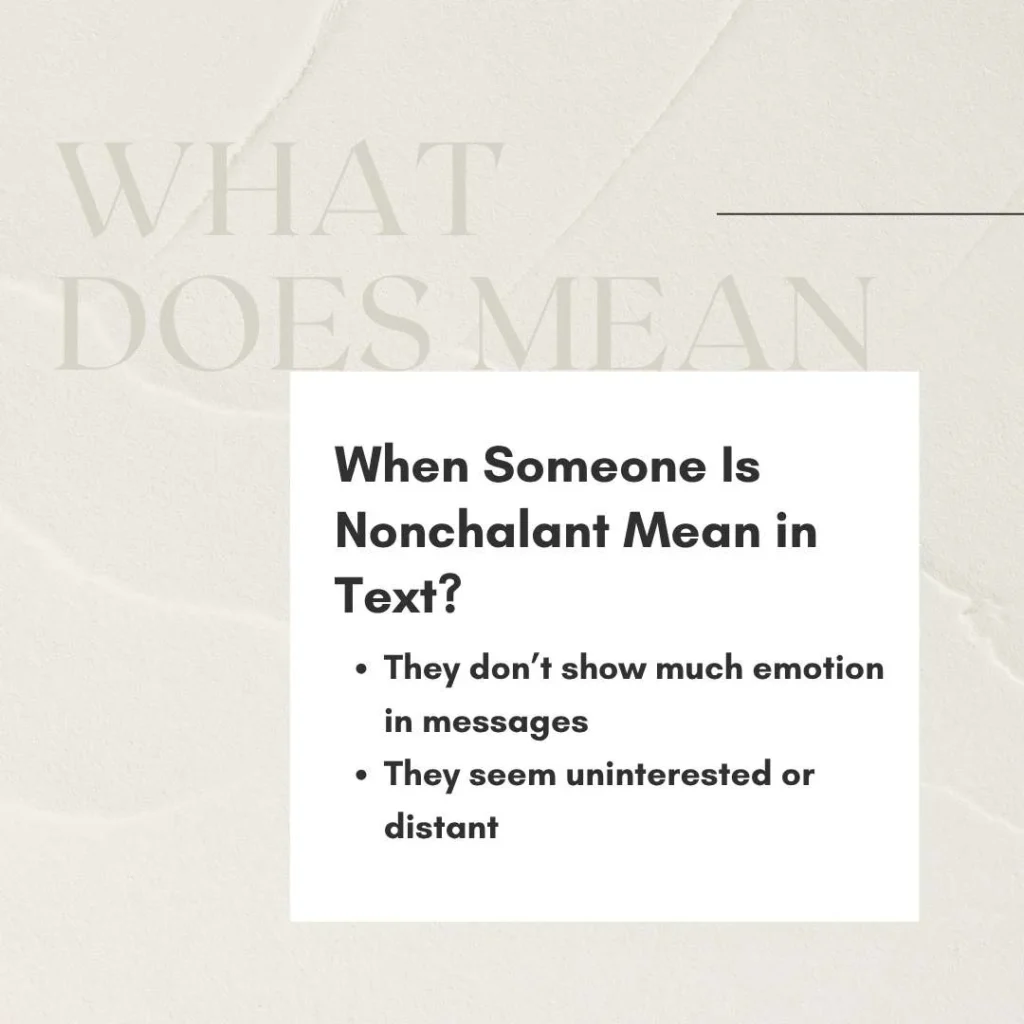
In texting, calling someone “nonchalant” usually means:
- They reply in a calm or low-energy way
- They don’t show much emotion in messages
- They seem uninterested or distant
Example:
Person A: “I miss you 😢”
Person B: “Oh, okay.”
👉 Person B sounds nonchalant
What Does What Does It Mean When Someone Is Nonchalant Mean on Social Media (TikTok, Instagram, etc.)?
On platforms like TikTok and Instagram, “nonchalant” is often used to describe someone who:
- Acts cool and unbothered
- Doesn’t chase attention
- Has a “too chill to care” vibe
It can be seen as attractive (confident energy) or annoying (seems like they don’t care at all).
Platform-Based Examples
WhatsApp Chat Example:
You: “Did you see what happened today?? 😱”
Them: “Yeah. It’s whatever.”
👉 Nonchalant reply
Instagram DM Example:
You: “You looked amazing in that post!”
Them: “Thanks.”
👉 Short, low-effort = nonchalant
TikTok Comment Example:
Comment: “Why are you so calm about everything?”
Reply: “I just don’t stress.”
👉 Classic nonchalant vibe
Real-Life Meaning and Usage
In real life, a nonchalant person:
- Doesn’t react strongly to problems
- Stays calm under pressure
- May appear confident or emotionally distant
For example, someone who loses a game but just smiles and says, “It’s okay,” is being nonchalant.
Real-Life Situations Where This Term Is Used
- During arguments (they stay calm)
- In stressful situations (exams, interviews)
- In relationships (not showing strong emotions)
- At work (handling pressure quietly)
Examples of What Does It Mean When Someone Is Nonchalant in Sentences
- He gave a nonchalant shrug when asked about the mistake.
- She seemed nonchalant about the big news.
- His nonchalant attitude made him look confident.
- Don’t act so nonchalant—this is important!
- She replied in a nonchalant way, like she didn’t care.
Different Contexts of What Does It Mean When Someone Is Nonchalant
Casual:
Used to describe someone chill or relaxed
Academic:
Refers to emotional control or composure
Online/Slang:
Can mean “acting cool” or “low effort”
Origin and History of the Term
The word “nonchalant” comes from French:
- “Nonchaloir” meaning “to not concern”
- Entered English in the 1700s
Originally, it simply meant not being concerned or bothered—and that meaning still applies today.
Why Do People Use This Word?
People use “nonchalant” to describe:
- Calm personalities
- Cool, confident behavior
- Emotional distance
It’s a quick way to explain someone who doesn’t overreact.
Emotional & Psychological Meaning Behind This Word
Being nonchalant can reflect:
- Confidence – Comfortable with situations
- Emotional control – Not easily triggered
- Avoidance – Hiding feelings
- Detachment – Not emotionally invested
Sometimes it’s genuine calmness. Other times, it’s a defense mechanism.
Tone Explanation
- Formal: Yes
- Informal: Yes
- Slang: Sometimes (on social media)
- Rude: Depends on context
Is It Rude to Say This Word?
Not usually. But it can feel rude if:
- You’re calling someone out for not caring
- It sounds like criticism
Example:
“You’re so nonchalant”
👉 Can sound negative depending on tone
Is This Word Positive, Negative, or Neutral?
- Positive: Calm, confident
- Neutral: Just descriptive
- Negative: Emotionally distant or careless
It depends on how it’s used.
When to Use What Does It Mean When Someone Is Nonchalant
Use it when:
- Describing calm behavior
- Talking about someone’s attitude
- Explaining emotional reactions
When NOT to Use What Does It Mean When Someone Is Nonchalant
Avoid using it when:
- Someone is clearly emotional
- You might hurt someone’s feelings
- The situation is serious and needs empathy
Situations Where You Should Avoid Using This Word
- During emotional conversations
- In sensitive relationships
- When someone needs support
Calling someone nonchalant at the wrong time can seem dismissive.
Comparison Table
| Term | Meaning | Usage | Key Difference |
| Nonchalant | Calm, unbothered | General behavior | Neutral tone |
| Indifferent | Doesn’t care | Emotional context | More negative |
| Chill | Relaxed and easygoing | Casual/slang | More positive |
| Aloof | Distant and reserved | Personality description | More cold |
Variations and Related Meanings
- Chill – Relaxed and easygoing
- Unbothered – Not affected by anything
- Cool-headed – Calm in stress
- Detached – Emotionally distant
- Carefree – Not worried
- Laid-back – Easygoing personality
- Apathetic – Lacking interest (negative)
- Relaxed – Physically and mentally calm
How to Respond to a Nonchalant Person
Casual Replies
- “Why are you so chill about this?”
- “You don’t care at all, huh?”
Funny Replies
- “Teach me your zero-stress powers 😂”
- “Are you human or just vibes?”
Professional/Mature Replies
- “I’d appreciate a bit more input on this.”
- “Can we discuss this more seriously?”
Cultural Usage
USA / Western Usage
- Often seen as cool and confident
- Popular in dating and social media culture
Global / Internet Usage
- Used widely in memes and TikTok
- Sometimes exaggerated for humor
What Does What Does It Mean When Someone Is Nonchalant Mean in Text?
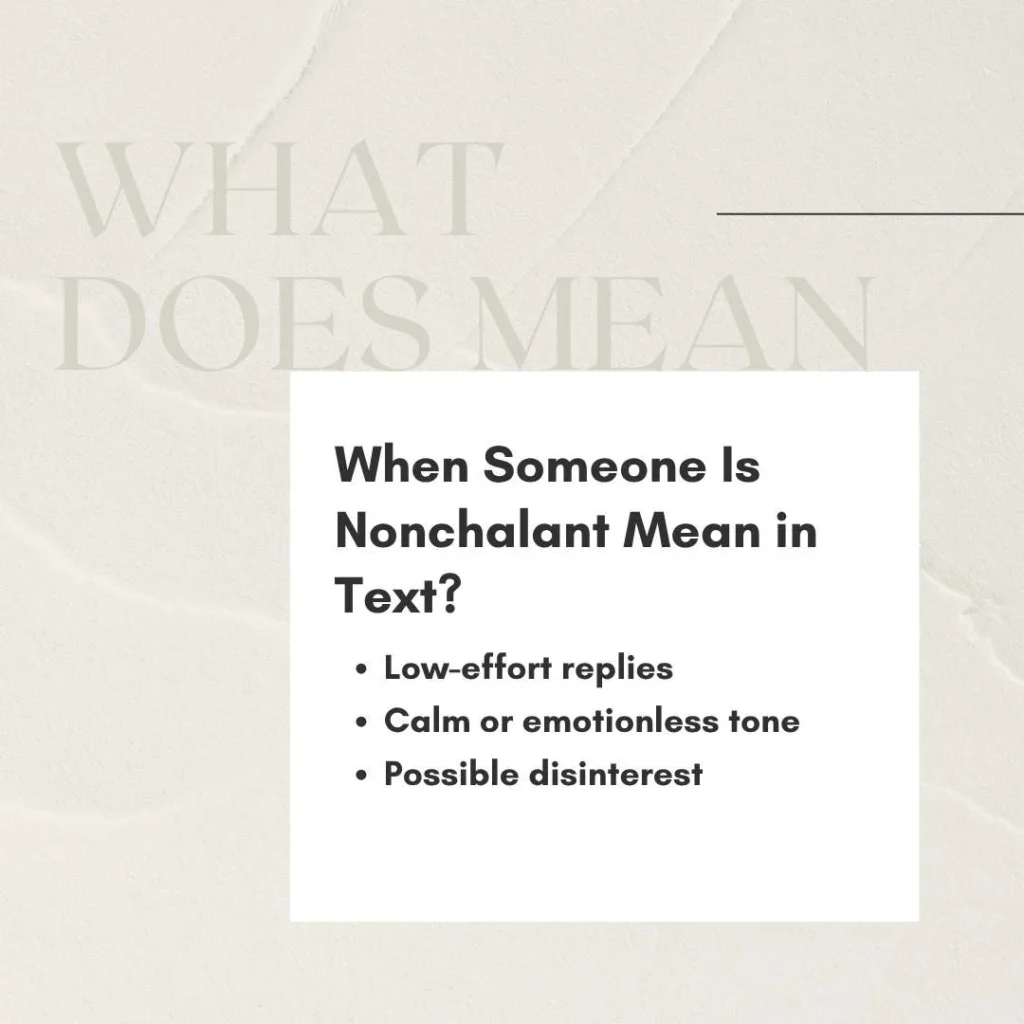
In text, it usually means:
- Low-effort replies
- Calm or emotionless tone
- Possible disinterest
What Does What Does It Mean When Someone Is Nonchalant Mean on TikTok / Instagram?
It means:
- Acting cool
- Not chasing attention
- Being emotionally low-key
Is It Rude to Say This?
It can be, depending on tone. If said as criticism, it may feel negative.
Why Do People Use This Word?
- To describe calm behavior
- To call out lack of effort
- To highlight confidence or detachment
FAQs
1. Is being nonchalant a good thing?
It can be good (calm, confident) or bad (seems careless).
2. Does nonchalant mean lazy?
No, it means relaxed—not necessarily lazy.
3. Is nonchalant attractive?
Sometimes yes, because it shows confidence.
4. Can someone fake being nonchalant?
Yes, people sometimes hide emotions this way.
5. What’s the opposite of nonchalant?
Emotional, expressive, or reactive.
6. Is nonchalant the same as cold?
Not always—cold is more negative.
7. Why do people act nonchalant in relationships?
To seem less attached or protect feelings.
Conclusion
Understanding what does it mean when someone is nonchalant helps you read people better in real life and online. It usually describes someone calm, relaxed, and unbothered—but depending on the situation, it can also feel like they don’t care.
The key is context. Nonchalant behavior can signal confidence, emotional control, or even hidden feelings. Once you recognize it, you’ll better understand how people communicate—and how to respond wisely.

Daniel Carter is a passionate writer and creative storyteller dedicated to exploring the deeper meanings of life, dreams, and human experiences. With a strong interest in symbolism, spirituality, and personal growth, Daniel brings clarity to complex ideas, making them easy to understand for readers from all walks of life.
As a featured author on meaniings.com, Daniel Carter focuses on delivering insightful, well-researched, and engaging content that helps readers uncover hidden meanings behind dreams, emotions, and everyday situations. His writing style combines thoughtful analysis with a relatable voice, making his work both informative and inspiring.
Daniel’s approach is rooted in curiosity and a desire to guide readers toward self-awareness and understanding. He believes that every dream and experience carries a message—one that can lead to personal transformation when interpreted correctly.
Over time, Daniel has built a reputation for creating meaningful content that resonates with a global audience, especially those interested in dream interpretation and spiritual insight.
Books by Daniel Carter:
- The Hidden Language of Dreams
- Signs, Symbols, and Their Meanings
- Unlocking the Power of Your Subconscious Mind