
If you’re wondering what does hyperfixation mean, the simple answer is this: hyperfixation is an intense focus on a specific activity, topic, hobby, person, or interest for a long period of time, often to the exclusion of other things. Someone experiencing hyperfixation may become deeply absorbed in one subject and spend hours, days, or even months thinking about it.
Today, the term is commonly used in conversations about mental health, online communities, social media, and everyday life. Understanding the meaning of hyperfixation can help you recognize it in yourself and others.
What Does Hyperfixation Mean?(Quick Meaning)
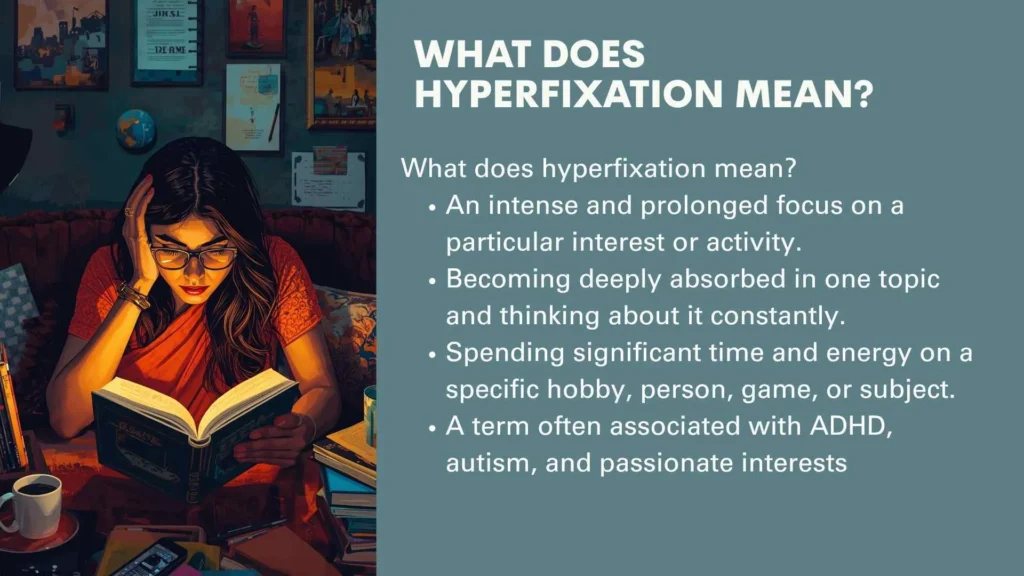
What does hyperfixation mean?
- An intense and prolonged focus on a particular interest or activity.
- Becoming deeply absorbed in one topic and thinking about it constantly.
- Spending significant time and energy on a specific hobby, person, game, or subject.
- A term often associated with ADHD, autism, and passionate interests.
Featured Snippet Answer:
Hyperfixation means becoming extremely focused on a particular activity, interest, or topic for an extended period, often making it difficult to pay attention to other things.
What Does Hyperfixation Mean?
The definition of hyperfixation refers to a state of intense concentration where a person becomes deeply interested in something and dedicates most of their attention to it.
Unlike normal interest or enthusiasm, hyperfixation can feel almost all-consuming. A person may lose track of time, forget responsibilities, or repeatedly think about the same topic.
Examples include:
- Playing the same video game for hours.
- Researching a favorite celebrity nonstop.
- Watching every episode of a TV series in a short time.
- Becoming obsessed with learning about a new hobby.
Full Meaning in Simple Words
In simple words, hyperfixation happens when your brain becomes locked onto something that feels extremely interesting or rewarding.
Imagine discovering a new hobby and becoming so excited that you spend every free moment thinking about it. You watch videos, read articles, join online groups, and talk about it constantly.
That’s often what hyperfixation feels like.
It isn’t always harmful. In some cases, it can help people learn quickly or develop expertise. However, it can become problematic if it interferes with work, school, sleep, or relationships.
What Does Hyperfixation Mean in Text?
In texting, people use the word hyperfixation to describe something they can’t stop thinking about.
Examples
Friend: “You’ve been posting about that game every day.”
Reply: “Yeah, it’s my current hyperfixation.”
Friend: “Why are you watching so many cooking videos?”
Reply: “I’m hyperfixated on baking right now.”
In text conversations, the word usually means:
- A strong temporary obsession
- An intense interest
- A favorite topic that occupies someone’s thoughts
What Does Hyperfixation Mean on Social Media (TikTok, Instagram, etc.)?
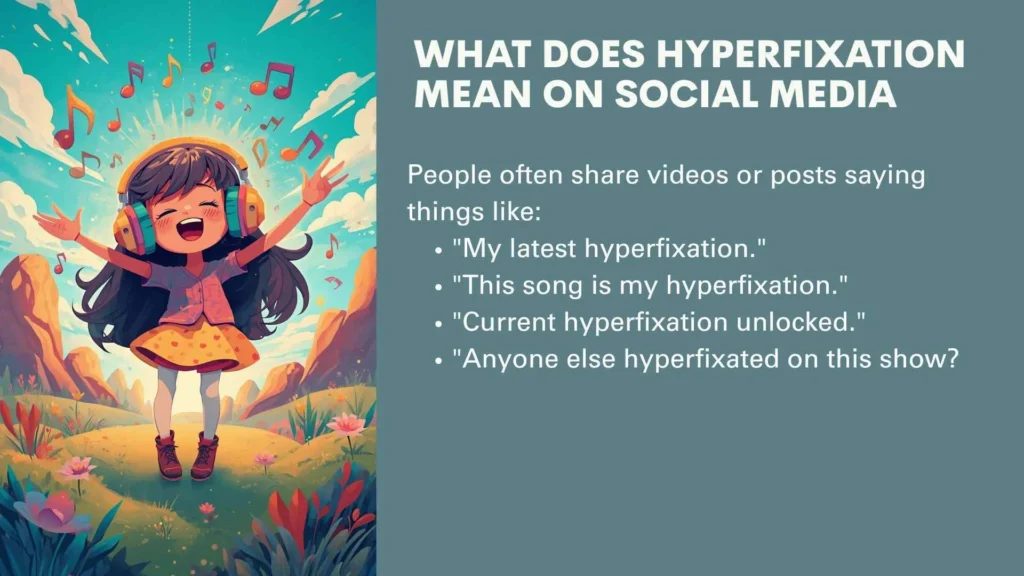
On platforms like TikTok, Instagram, X, and Reddit, hyperfixation is commonly used to describe a current obsession or favorite interest.
People often share videos or posts saying things like:
- “My latest hyperfixation.”
- “This song is my hyperfixation.”
- “Current hyperfixation unlocked.”
- “Anyone else hyperfixated on this show?”
On social media, the term is often used casually, even by people without a medical diagnosis.
TikTok Usage
TikTok creators frequently use hyperfixation when discussing:
- TV shows
- Music artists
- Video games
- Fashion trends
- Books
Instagram Usage
Instagram users may post stories such as:
“Sorry for all the cat content. Cats are my current hyperfixation.”
Online Community Usage
Many fandom communities use the word to describe intense enthusiasm for:
- Movies
- Anime
- Sports teams
- Celebrities
- Books
WhatsApp Chat Example
Alex: What have you been doing all weekend?
Jordan: Honestly, I’ve been hyperfixated on learning guitar.
Alex: For three days straight?
Jordan: Pretty much.
Instagram DM Example
User 1: Why are you posting so many coffee reels?
User 2: Coffee has become my hyperfixation lately.
TikTok Comment Example
Creator: My entire personality right now is this TV show.
Comment: Same! It’s become my biggest hyperfixation this month.
Real-Life Meaning and Usage
In real life, hyperfixation can affect how people spend their time, energy, and attention.
Some common examples include:
- Learning everything about dinosaurs.
- Watching hours of true crime documentaries.
- Collecting sports cards.
- Building model airplanes.
- Practicing a musical instrument constantly.
Many people experience periods of intense focus, but hyperfixation tends to be stronger and longer-lasting.
Real-Life Situations Where This Term Is Used
At School
A student becomes fascinated with astronomy and spends every spare moment studying planets.
At Work
An employee becomes deeply interested in a software tool and spends weeks mastering it.
In Gaming
A gamer spends several hours daily exploring every aspect of a new game.
In Entertainment
A fan watches every interview and video related to a favorite actor.
In Hobbies
Someone discovers photography and dedicates most of their free time to learning it.
Examples of Hyperfixation in Sentences
- My current hyperfixation is learning Japanese.
- She’s been hyperfixated on that TV series for months.
- His hyperfixation on history helped him become an expert on the subject.
- I accidentally stayed awake all night because of my hyperfixation on the game.
- Their latest hyperfixation is collecting vintage records.
- Hyperfixation sometimes makes it difficult to switch tasks.
- My friend developed a hyperfixation on baking during the summer.
Different Contexts of Hyperfixation
Casual Context
Used to describe a strong interest.
Example:
“My hyperfixation right now is Formula 1 racing.”
Academic Context
Researchers may discuss hyperfixation in relation to attention and neurodevelopmental conditions.
Online Context
Frequently used in fandoms and social media communities.
Mental Health Context
Can be discussed in relation to ADHD, autism, and attention regulation.
Professional Context
Professionals may describe it as intense focus on a specific interest or task.
Origin and History of the Term
The word hyperfixation comes from two parts:
- Hyper = excessive or above normal.
- Fixation = concentrated attention on something.
The term became increasingly popular in psychology discussions and later spread through online communities and social media platforms.
In recent years, TikTok, Reddit, and other online spaces have made the term much more widely known.
Why Do People Use This Word?
People use the word hyperfixation because it describes a level of focus stronger than ordinary interest.
Reasons include:
- It explains intense enthusiasm.
- It helps describe attention patterns.
- It communicates passion for a topic.
- It is widely understood online.
The word often feels more accurate than saying:
- “I like this.”
- “I’m interested in this.”
- “This is my hobby.”
Emotional & Psychological Meaning Behind This Word
Psychologically, hyperfixation often reflects how attention can become highly concentrated on something rewarding or stimulating.
For some individuals, hyperfixation may provide:
- Comfort
- Excitement
- Relaxation
- Stress relief
- A sense of achievement
However, excessive hyperfixation can sometimes lead to:
- Neglecting responsibilities
- Missing deadlines
- Reduced sleep
- Social withdrawal
The experience varies from person to person.
Tone Explanation
| Tone Type | Is Hyperfixation Used This Way? |
| Formal | Sometimes |
| Informal | Very common |
| Slang | Often |
| Professional | Occasionally |
| Offensive | No |
| Rude | No |
The term is generally considered neutral and acceptable in most conversations.
Is It Rude to Say This Word?
No, hyperfixation is not considered rude.
Most people use it as a descriptive term rather than an insult.
However, avoid using it to mock someone’s interests.
For example:
❌ “You’re weirdly hyperfixated on that.”
A more respectful approach is:
✅ “You seem really interested in that topic.”
Is This Word Positive, Negative, or Neutral?
Hyperfixation is generally neutral.
Positive Uses
- Learning new skills
- Developing expertise
- Creative projects
Negative Uses
- Ignoring responsibilities
- Losing sleep
- Difficulty shifting focus
Neutral Uses
- Describing strong interest
When to Use Hyperfixation
Use the word when describing:
- Intense focus
- Strong interests
- Temporary obsessions
- Deep engagement with a topic
Examples:
- “I’m hyperfixated on this book series.”
- “She’s hyperfixated on gardening.”
When NOT to Use Hyperfixation
Avoid using it when:
- Someone only casually likes something.
- You want to diagnose a medical condition.
- You’re speaking about brief interest that lasts only minutes.
Situations Where You Should Avoid Using This Word
Avoid using hyperfixation:
- As a joke about mental health.
- To label strangers.
- To diagnose someone online.
- To criticize another person’s hobbies.
Hyperfixation vs Similar Terms
| Term | Meaning | Usage | Key Difference |
| Hyperfixation | Intense focus on one interest | Mental health, online, casual | Strong concentration |
| Obsession | Persistent preoccupation | Everyday language | Often more extreme |
| Passion | Deep enthusiasm | Positive contexts | Usually balanced |
| Interest | General curiosity | Everyday conversation | Less intense |
| Hobby | Regular activity for enjoyment | Leisure activities | Doesn’t require intense focus |
Variations and Related Meanings
Here are common variations related to hyperfixation:
1. Temporary Hyperfixation
A short-term intense interest.
2. Long-Term Hyperfixation
Focus lasting months or years.
3. Fandom Hyperfixation
Strong focus on movies, books, or celebrities.
4. Academic Hyperfixation
Intense interest in studying a subject.
5. Hobby Hyperfixation
Deep involvement in a hobby.
6. Gaming Hyperfixation
Extreme focus on a specific game.
7. Music Hyperfixation
Listening to the same songs repeatedly.
8. Research Hyperfixation
Constant learning about one topic.
9. Creative Hyperfixation
Focus on art, writing, or design.
10. Social Media Hyperfixation
Repeated engagement with specific content.
How to Respond to Someone Saying They’re Hyperfixated
Casual Replies
- “That’s awesome!”
- “Tell me more about it.”
- “You seem really into that.”
Funny Replies
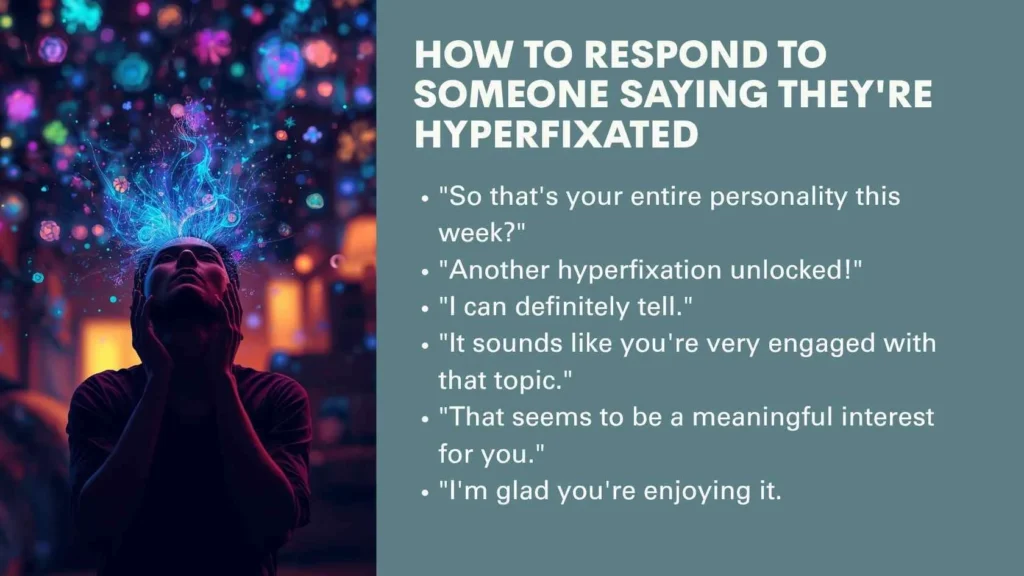
- “So that’s your entire personality this week?”
- “Another hyperfixation unlocked!”
- “I can definitely tell.”
Professional or Mature Replies
- “It sounds like you’re very engaged with that topic.”
- “That seems to be a meaningful interest for you.”
- “I’m glad you’re enjoying it.”
Cultural Usage
USA / Western Usage
In the United States and other Western countries, hyperfixation is commonly used in:
- Mental health discussions
- ADHD communities
- Autism communities
- Social media trends
- Fandom culture
Global and Internet Usage
Online communities worldwide use the term similarly.
However, in some regions, people may simply say:
- Obsession
- Strong interest
- Passion
- Favorite hobby
instead of hyperfixation.
What Does Hyperfixation Mean on TikTok and Instagram?
On TikTok and Instagram, hyperfixation usually means:
- A current obsession
- A favorite topic
- Something someone constantly watches, reads, or talks about
Creators often use the term humorously to describe trends and interests.
Is It Rude to Say This?
No. Hyperfixation is generally respectful and widely accepted.
The only concern is using it carelessly to diagnose or judge someone.
Why Do People Use This Word?
People use hyperfixation because it quickly communicates:
- Strong focus
- Deep enthusiasm
- Intense interest
- Temporary obsession
It has become especially popular in internet culture because it describes a common experience many people relate to.
Frequently Asked Questions
What does hyperfixation mean in slang?
In slang, hyperfixation means being extremely interested in something and thinking about it constantly.
Is hyperfixation the same as obsession?
Not exactly. Hyperfixation usually emphasizes intense focus, while obsession can carry a more negative meaning.
Is hyperfixation a mental disorder?
No. Hyperfixation itself is not a disorder, though it is often discussed alongside conditions such as ADHD and autism.
What does hyperfixation mean in text messages?
In text messages, it usually means someone is currently very focused on or excited about a particular topic.
Can hyperfixation be positive?
Yes. It can help people learn skills, gain knowledge, and become highly productive in certain areas.
How long does a hyperfixation last?
It varies. Some last days, while others may continue for months or longer.
Why do people talk about hyperfixation on TikTok?
TikTok users often share their current interests, hobbies, and fandoms, making hyperfixation a popular term on the platform.
Conclusion
Understanding what does hyperfixation mean is important because the term appears everywhere—from text messages and social media posts to conversations about psychology and personal interests. Hyperfixation refers to an intense focus on a specific activity, hobby, subject, or interest that captures a person’s attention for an extended period.
While hyperfixation can sometimes create challenges when it interferes with daily life, it can also lead to learning, creativity, and personal growth. Whether you encounter the term on TikTok, Instagram, WhatsApp, or in everyday conversation, it usually describes a strong level of interest that goes beyond ordinary enthusiasm.

Daniel Carter is a passionate writer and creative storyteller dedicated to exploring the deeper meanings of life, dreams, and human experiences. With a strong interest in symbolism, spirituality, and personal growth, Daniel brings clarity to complex ideas, making them easy to understand for readers from all walks of life.
As a featured author on meaniings.com, Daniel Carter focuses on delivering insightful, well-researched, and engaging content that helps readers uncover hidden meanings behind dreams, emotions, and everyday situations. His writing style combines thoughtful analysis with a relatable voice, making his work both informative and inspiring.
Daniel’s approach is rooted in curiosity and a desire to guide readers toward self-awareness and understanding. He believes that every dream and experience carries a message—one that can lead to personal transformation when interpreted correctly.
Over time, Daniel has built a reputation for creating meaningful content that resonates with a global audience, especially those interested in dream interpretation and spiritual insight.
Books by Daniel Carter:
- The Hidden Language of Dreams
- Signs, Symbols, and Their Meanings
- Unlocking the Power of Your Subconscious Mind