
What does trauma bonding mean? Trauma bonding is a strong emotional attachment that develops between a person and someone who repeatedly hurts, manipulates, or abuses them. This bond forms through cycles of kindness, mistreatment, guilt, and reconciliation, making it difficult for the affected person to leave the relationship.
Although the relationship is unhealthy, the emotional connection can feel incredibly powerful. Understanding what does trauma bonding mean can help you recognize unhealthy relationship patterns and seek healthier emotional connections.
What Does Trauma Bonding Mean (Quick Meaning)
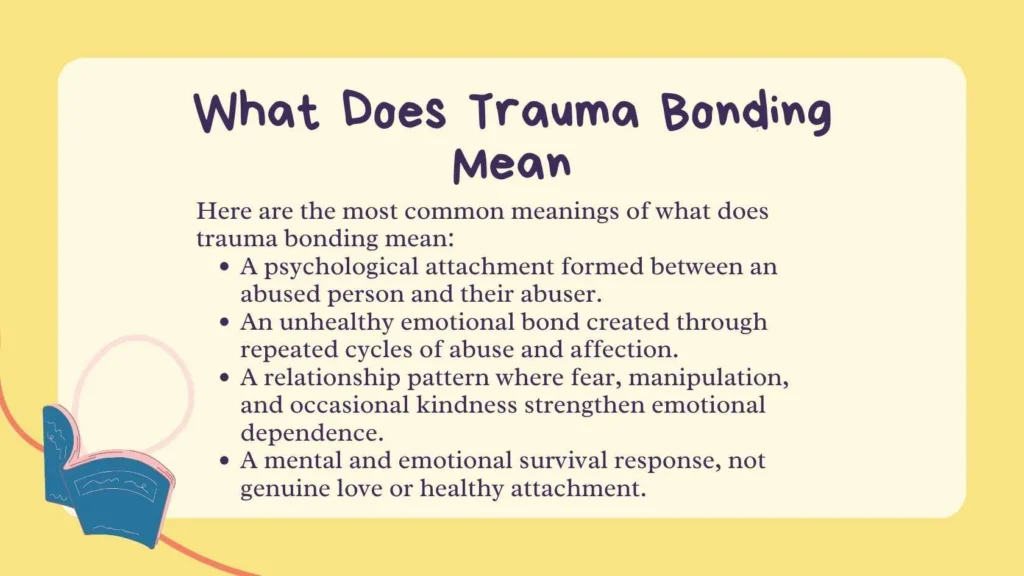
Here are the most common meanings of what does trauma bonding mean:
- A psychological attachment formed between an abused person and their abuser.
- An unhealthy emotional bond created through repeated cycles of abuse and affection.
- A relationship pattern where fear, manipulation, and occasional kindness strengthen emotional dependence.
- A mental and emotional survival response, not genuine love or healthy attachment.
Quick Answer: Trauma bonding refers to an emotional connection that develops through repeated abuse followed by periods of kindness, making it difficult for someone to leave an unhealthy relationship.
What Does Trauma Bonding Mean?
Trauma bonding is not simply loving someone despite their flaws. Instead, it describes a psychological bond created through repeated emotional or physical harm followed by positive reinforcement.
The cycle often looks like this:
- The abuser hurts or manipulates the victim.
- The victim feels confused, scared, or emotionally overwhelmed.
- The abuser apologizes, becomes affectionate, or promises to change.
- Hope returns.
- The cycle repeats.
Over time, the victim may become emotionally attached despite ongoing abuse.
Full Meaning in Simple Words
In simple terms, trauma bonding means becoming emotionally connected to someone who repeatedly causes emotional or physical pain.
Imagine someone who constantly insults you but later buys you gifts, apologizes, or acts extremely loving. Your brain begins associating the brief moments of affection with relief from pain. Eventually, leaving the relationship feels harder than staying.
Trauma bonding is common in:
- Romantic relationships
- Domestic abuse situations
- Toxic family relationships
- Cults
- Human trafficking
- Some workplace environments
What Does Trauma Bonding Mean in Text?
When someone uses trauma bonding in a text message, they’re usually talking about an unhealthy emotional attachment rather than a normal close relationship.
Example
Friend: “Why don’t they just leave?”
Reply: “It may be trauma bonding. Leaving isn’t always easy because abuse and affection get mixed together.”
What Does Trauma Bonding Mean on Social Media (TikTok, Instagram, etc.)?
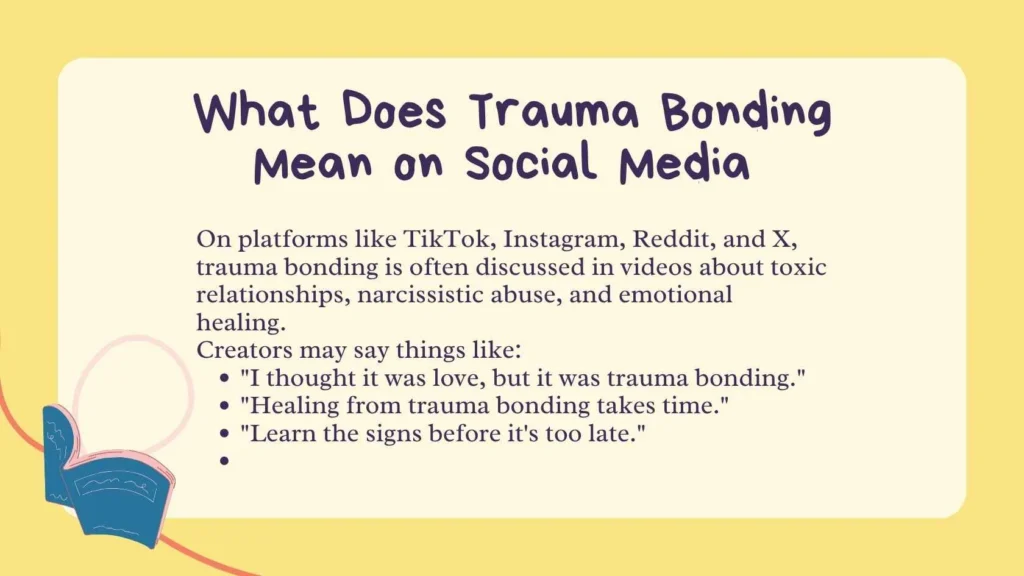
On platforms like TikTok, Instagram, Reddit, and X, trauma bonding is often discussed in videos about toxic relationships, narcissistic abuse, and emotional healing.
Creators may say things like:
- “I thought it was love, but it was trauma bonding.”
- “Healing from trauma bonding takes time.”
- “Learn the signs before it’s too late.”
However, social media sometimes misuses the term by applying it to any difficult relationship. In psychology, trauma bonding has a much more specific meaning involving repeated abuse and emotional dependency.
WhatsApp Chat Example
Emma: I know he’s hurt me so many times.
Sarah: Then why do you stay?
Emma: I don’t even know. I still feel attached.
Sarah: That sounds like trauma bonding. You deserve support.
Instagram DM Example
Person A: I keep going back even after everything.
Person B: That might be trauma bonding rather than love. Have you talked to a therapist?
TikTok Comment Example
Video: “Signs you’re trauma bonded.”
Comment: “I finally realized this explained my last relationship.”
Real-Life Meaning and Usage
People use the term trauma bonding when discussing unhealthy relationships that involve repeated cycles of abuse and emotional dependence.
It commonly appears in conversations about:
- Domestic violence
- Emotional manipulation
- Narcissistic relationships
- Psychological recovery
- Therapy and mental health
It should not be used casually to describe ordinary disagreements or complicated friendships.
Real-Life Situations Where This Term Is Used
Trauma bonding may be discussed in situations like:
- A partner repeatedly apologizes after abusive behavior.
- Someone keeps returning to an abusive relationship.
- A therapist explains why leaving an abusive relationship feels difficult.
- Support groups discuss emotional recovery.
- Mental health educators teach about abusive relationship patterns.
Examples of Trauma Bonding in Sentences
- Her therapist explained that she was experiencing trauma bonding.
- Trauma bonding made it difficult for him to leave the abusive relationship.
- Understanding trauma bonding helped her recognize manipulation.
- Many survivors need support while recovering from trauma bonding.
- The documentary explored trauma bonding in abusive partnerships.
- Learning about trauma bonding gave him the confidence to seek help.
Different Contexts of Trauma Bonding
| Context | Meaning |
| Psychological | Emotional attachment formed through abuse cycles |
| Therapy | A concept used to explain abusive relationship dynamics |
| Educational | Teaching about emotional manipulation |
| Social Media | Often discussed in mental health content |
| Casual Conversation | Sometimes incorrectly used for any toxic relationship |
Origin and History of the Term
The concept of trauma bonding became more widely recognized through research on abusive relationships and interpersonal violence.
Psychologists observed that victims often developed strong emotional attachments to abusive partners despite ongoing harm.
The theory explains how fear, dependency, isolation, and intermittent kindness create powerful emotional connections.
Today, trauma bonding is commonly discussed by:
- Therapists
- Psychologists
- Domestic violence advocates
- Mental health educators
Why Do People Use This Word?
People use the term because it explains why leaving an abusive relationship is often much harder than outsiders expect.
Instead of blaming victims, the concept helps people understand the psychological effects of repeated abuse.
The term also helps:
- Increase awareness
- Encourage compassion
- Reduce victim blaming
- Promote healthy relationships
Emotional & Psychological Meaning Behind This Word
Trauma bonding involves powerful psychological processes.
Several factors contribute to it:
- Fear
- Hope for change
- Emotional dependency
- Isolation
- Manipulation
- Intermittent affection
- Low self-esteem
- Survival instincts
The brain begins associating temporary kindness with emotional relief, making the bond feel extremely strong.
This is one reason trauma bonding can be so difficult to break.
Tone Explanation
The phrase trauma bonding is:
- Clinical
- Educational
- Psychological
- Serious
- Professional
It is not slang.
Because it relates to abuse and mental health, it should always be used respectfully.
Is It Rude to Say This Word?
No.
However, using it incorrectly can be insensitive.
Avoid saying someone is trauma bonded unless there is a genuine understanding of what the term means.
It’s better to avoid diagnosing other people’s relationships without enough information.
Is This Word Positive, Negative, or Neutral?
The term itself is neutral, but it describes a negative psychological experience.
It is used to educate rather than insult.
When to Use Trauma Bonding
Use the term when discussing:
- Abusive relationships
- Domestic violence
- Psychological healing
- Therapy
- Emotional manipulation
- Mental health education
When NOT to Use Trauma Bonding
Do not use it when describing:
- Ordinary arguments
- Healthy emotional attachment
- Minor relationship problems
- Normal breakups
- Temporary disagreements
Misusing the term can minimize the experiences of abuse survivors.
Situations Where You Should Avoid Using This Word
Avoid using trauma bonding when:
- Diagnosing someone without expertise.
- Joking about relationships.
- Describing every difficult relationship.
- Using it as an insult.
- Dismissing someone’s personal experience.
Trauma Bonding Compared with Similar Terms
| Term | Meaning | Usage | Key Difference |
| Trauma Bonding | Emotional attachment formed through abuse | Psychology | Involves repeated abuse and affection cycles |
| Codependency | Unhealthy emotional reliance | Relationships | Doesn’t always involve abuse |
| Emotional Attachment | Emotional connection | Everyday life | Can be healthy or unhealthy |
| Stockholm Syndrome | Sympathy toward captors | Rare psychological situations | Usually involves hostage or captivity situations |
Variations and Related Meanings
Although trauma bonding has one primary definition, related concepts include:
- Trauma bond
- Trauma-bonded relationship
- Emotional dependency
- Abuse cycle
- Intermittent reinforcement
- Toxic attachment
- Manipulative relationship
- Narcissistic abuse bond
- Emotional captivity
- Psychological attachment after abuse
Each relates to unhealthy emotional dependence, though they are not exact synonyms.
How to Respond When Someone Mentions Trauma Bonding
Casual Replies
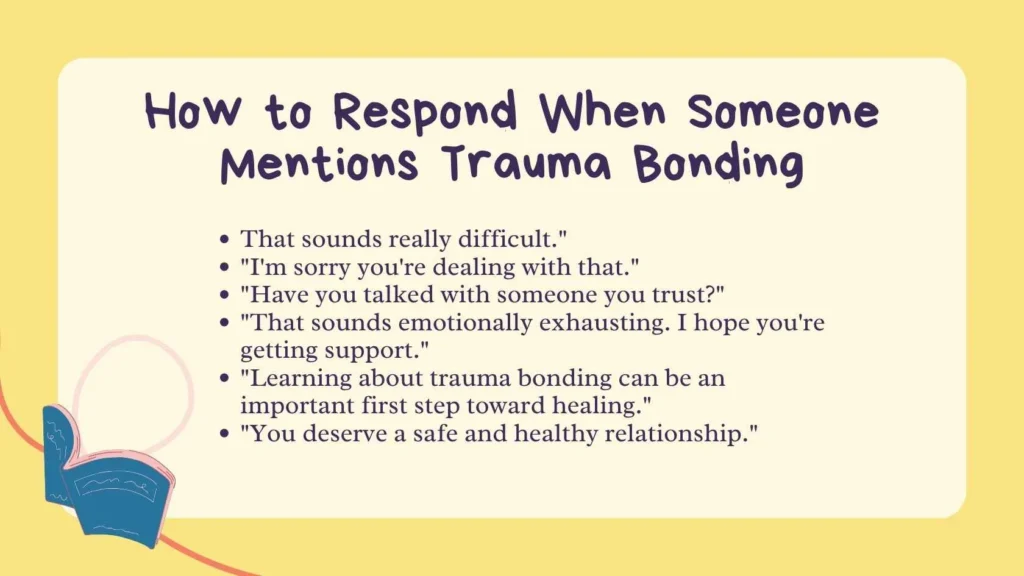
- “That sounds really difficult.”
- “I’m sorry you’re dealing with that.”
- “Have you talked with someone you trust?”
Funny Replies
Because trauma bonding involves serious emotional harm, humorous responses are generally inappropriate. It’s best to respond with empathy rather than jokes.
Professional or Mature Replies
- “That sounds emotionally exhausting. I hope you’re getting support.”
- “Learning about trauma bonding can be an important first step toward healing.”
- “You deserve a safe and healthy relationship.”
Cultural Usage
USA and Western Usage
In the United States and many Western countries, trauma bonding is commonly discussed in:
- Therapy
- Mental health education
- Domestic violence awareness
- Psychology books
- Podcasts
- Social media
Awareness has increased significantly over the past decade.
Global and Internet Usage
Across the internet, the term has spread worldwide through:
- TikTok
- YouTube
- Online therapy communities
However, online discussions sometimes overuse or misunderstand the term, applying it to relationships that don’t involve abuse.
Frequently Asked Questions
Is trauma bonding the same as love?
No. Healthy love involves trust, respect, and safety. Trauma bonding develops through repeated abuse and emotional manipulation.
Can trauma bonding happen in friendships?
Yes. Although it is most common in romantic relationships, trauma bonding can occur in friendships, families, workplaces, or other relationships involving repeated abuse and dependency.
How do you break a trauma bond?
Recovery often involves creating distance from the abusive person, building a support network, learning about abusive relationship patterns, and, for many people, working with a qualified mental health professional.
Is trauma bonding a medical diagnosis?
No. It is a psychological concept used to describe a pattern of attachment in abusive relationships rather than a formal mental health diagnosis.
Why is it so hard to leave a trauma bond?
Cycles of abuse followed by affection can create powerful emotional dependence, making leaving emotionally and psychologically challenging.
Can trauma bonding happen without physical abuse?
Yes. Emotional, verbal, financial, or psychological abuse can also contribute to trauma bonding.
Is trauma bonding permanent?
No. With support, education, healthy relationships, and appropriate professional help, many people recover and build healthier emotional connections.
Conclusion
Understanding what does trauma bonding mean is important because it explains why people sometimes remain deeply attached to someone who repeatedly hurts them. Rather than being a sign of weakness, trauma bonding is a psychological response to cycles of abuse, manipulation, and intermittent kindness.
Learning the meaning of trauma bonding can help you recognize unhealthy relationship patterns, support loved ones with compassion, and make informed decisions about emotional well-being. If you or someone you know may be experiencing an abusive relationship, seeking help from trusted friends, family members, or a qualified mental health professional can be an important step toward safety and recovery.

Daniel Carter is a passionate writer and creative storyteller dedicated to exploring the deeper meanings of life, dreams, and human experiences. With a strong interest in symbolism, spirituality, and personal growth, Daniel brings clarity to complex ideas, making them easy to understand for readers from all walks of life.
As a featured author on meaniings.com, Daniel Carter focuses on delivering insightful, well-researched, and engaging content that helps readers uncover hidden meanings behind dreams, emotions, and everyday situations. His writing style combines thoughtful analysis with a relatable voice, making his work both informative and inspiring.
Daniel’s approach is rooted in curiosity and a desire to guide readers toward self-awareness and understanding. He believes that every dream and experience carries a message—one that can lead to personal transformation when interpreted correctly.
Over time, Daniel has built a reputation for creating meaningful content that resonates with a global audience, especially those interested in dream interpretation and spiritual insight.
Books by Daniel Carter:
- The Hidden Language of Dreams
- Signs, Symbols, and Their Meanings
- Unlocking the Power of Your Subconscious Mind