
If you’re wondering what does burnout mean emotionally, it refers to a state of emotional exhaustion caused by prolonged stress, pressure, or overwhelming responsibilities. Emotionally, burnout can make a person feel drained, detached, unmotivated, numb, or unable to cope with everyday demands.
The meaning of burnout emotionally goes beyond simply feeling tired. It affects how people think, feel, and connect with others, often leading to frustration, sadness, irritability, and a loss of enthusiasm for activities they once enjoyed.
Quick Meaning
Here are the most common meanings of what does burnout mean emotionally:
- Emotional exhaustion caused by long-term stress.
- Feeling mentally drained and unable to handle responsibilities.
- Loss of motivation or passion for work, school, or personal life.
- Emotional numbness or detachment from people and activities.
Burnout emotionally means feeling exhausted, overwhelmed, and emotionally drained due to prolonged stress. It often causes a person to lose motivation, feel detached from others, and struggle to find enjoyment in daily life.
What Does Burnout Mean Emotionally?
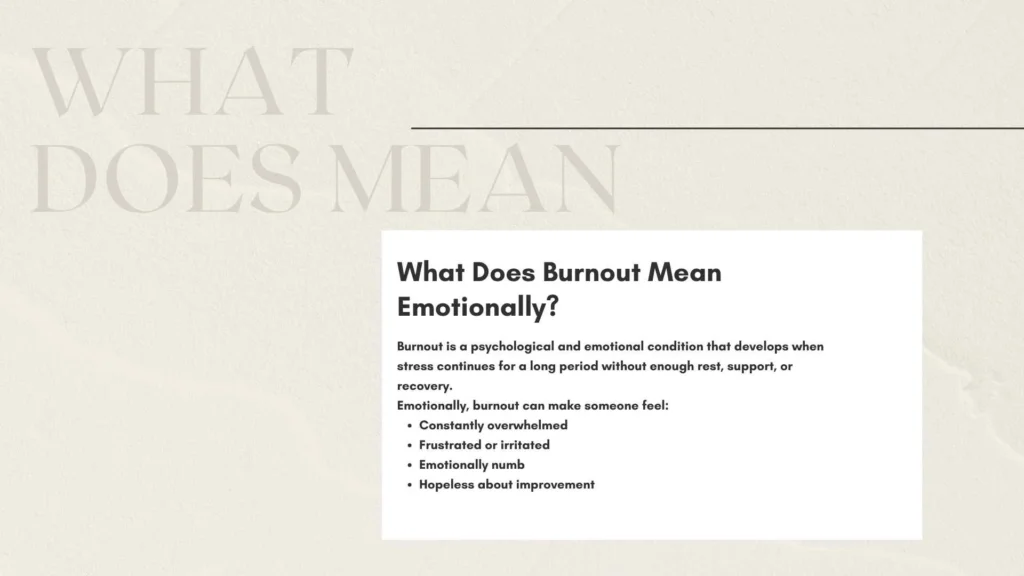
Burnout is a psychological and emotional condition that develops when stress continues for a long period without enough rest, support, or recovery.
Emotionally, burnout can make someone feel:
- Constantly overwhelmed
- Frustrated or irritated
- Emotionally numb
- Hopeless about improvement
- Less connected to others
- Unmotivated and exhausted
Unlike ordinary tiredness, emotional burnout doesn’t disappear after a good night’s sleep. It can persist for weeks or even months.
Full Meaning in Simple Words
In simple terms, emotional burnout happens when your emotional energy tank becomes empty.
Imagine trying to keep your phone running without charging it. Eventually, the battery dies. The same thing can happen to people when they face nonstop stress from work, school, parenting, relationships, or other responsibilities.
When emotionally burned out, a person may:
- Feel like they have nothing left to give
- Stop caring about things they once valued
- Become more sensitive to stress
- Withdraw from social interactions
- Feel emotionally “checked out”
What Does Burnout Mean in Text?
In texting and online conversations, burnout usually refers to emotional or mental exhaustion.
Text Example
Person A: “You’ve been quiet lately. Everything okay?”
Person B: “Honestly, I’m dealing with burnout right now. I just feel emotionally exhausted.”
In this context, burnout means the person feels mentally and emotionally overwhelmed.
What Does Burnout Mean on Social Media (TikTok, Instagram, etc.)?
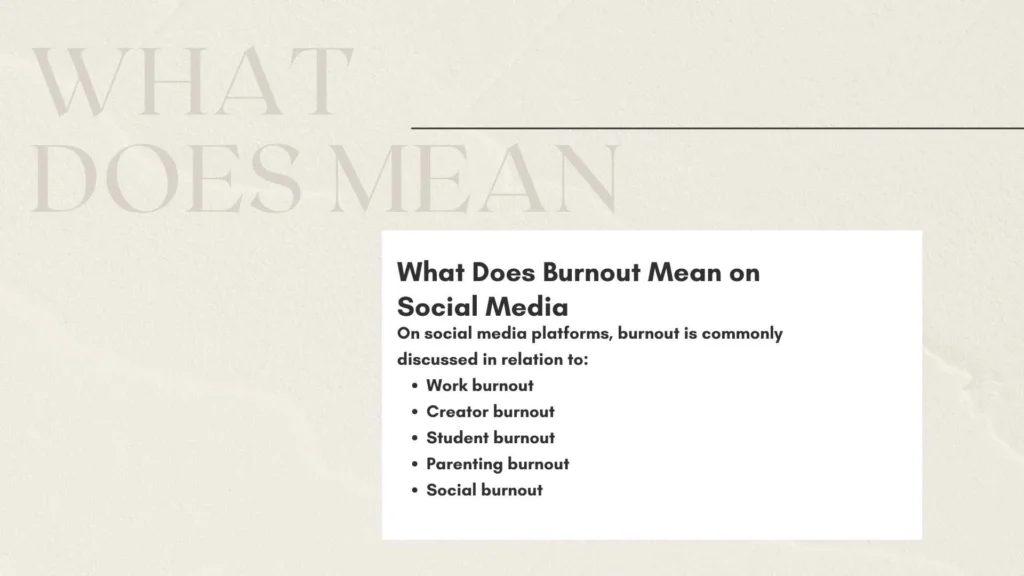
On social media platforms, burnout is commonly discussed in relation to:
- Work burnout
- Creator burnout
- Student burnout
- Parenting burnout
- Social burnout
People use the term to describe feeling emotionally depleted after dealing with constant pressure or expectations.
TikTok Usage
Many TikTok creators post videos discussing:
- Symptoms of burnout
- Mental health awareness
- Recovery strategies
- Personal experiences with emotional exhaustion
Instagram Usage
Instagram users often share burnout-related posts about:
- Work-life balance
- Mental wellness
- Self-care routines
- Emotional recovery
Social Media Example
“After posting content every day for a year, I finally hit burnout and needed a break.”
Platform-Based Examples
WhatsApp Chat Example
Friend: “Why aren’t you joining us this weekend?”
You: “I’ve been emotionally burned out lately. I need some time to recharge.”
Instagram DM Example
Follower: “You’ve been inactive recently.”
Creator: “Yeah, I was experiencing burnout and needed a mental health break.”
TikTok Comment Example
Comment: “Anyone else feeling burnout from work lately?”
Reply: “Absolutely. I’ve been emotionally exhausted for months.”
Real-Life Meaning and Usage
In everyday life, burnout is commonly used to describe emotional and mental exhaustion caused by ongoing stress.
People may experience burnout from:
- High-pressure jobs
- Academic demands
- Family responsibilities
- Caregiving duties
- Financial stress
- Social obligations
The term helps explain why someone feels emotionally depleted even when they are physically healthy.
Real-Life Situations Where This Term Is Used
Workplace Burnout
An employee works long hours for months without sufficient rest and begins feeling emotionally detached from work.
Student Burnout
A college student studies continuously for exams and becomes emotionally overwhelmed and exhausted.
Parenting Burnout
A parent caring for young children feels emotionally drained and struggles to find personal time.
Social Burnout
Someone who constantly attends social events begins feeling overwhelmed and emotionally exhausted from interaction.
Caregiver Burnout
A person caring for a sick family member experiences emotional fatigue from ongoing responsibilities.
Examples of Burnout in Sentences
- “After months of overtime, I started experiencing emotional burnout.”
- “She took a vacation because burnout was affecting her mental health.”
- “Student burnout is becoming increasingly common.”
- “His burnout made it difficult to stay motivated at work.”
- “Emotional burnout can impact relationships and overall well-being.”
- “I didn’t realize I was burned out until I stopped enjoying things I loved.”
- “Many healthcare workers experience burnout due to demanding schedules.”
Different Contexts of Burnout
| Context | Meaning |
| Casual Conversation | Feeling emotionally exhausted |
| Workplace | Chronic stress from job demands |
| Academic | Mental and emotional exhaustion from studying |
| Healthcare | Professional exhaustion among caregivers |
| Online Discussions | Feeling overwhelmed by digital life or responsibilities |
| Psychology | A recognized response to prolonged stress |
Origin and History of the Term
The term “burnout” became popular in the 1970s.
Psychologist Herbert Freudenberger used it to describe emotional exhaustion experienced by workers in helping professions.
Over time, the term expanded beyond workplaces and is now used to describe emotional exhaustion in many areas of life, including education, parenting, and social relationships.
Why Do People Use This Word?
People use the word burnout because it clearly describes a feeling that goes beyond normal tiredness.
The term helps explain:
- Emotional exhaustion
- Mental fatigue
- Loss of motivation
- Feeling overwhelmed
- Reduced emotional capacity
It gives people a way to communicate that they are struggling with ongoing stress.
Emotional & Psychological Meaning Behind This Word
Emotionally, burnout often involves:
Emotional Exhaustion
People feel drained and unable to process emotions effectively.
Detachment
Individuals may distance themselves emotionally from work, friends, or responsibilities.
Reduced Satisfaction
Activities that once brought happiness may no longer feel enjoyable.
Increased Irritability
Small problems can feel much bigger when someone is emotionally burned out.
Hopelessness
People may feel trapped in stressful situations and unsure how to improve them.
Tone Explanation
The word burnout is generally:
- Neutral in tone
- Commonly used in professional settings
- Accepted in mental health discussions
- Not considered slang
It can be used in both formal and informal conversations.
Is It Rude to Say This Word?
No, burnout is not considered rude.
It is a widely accepted term used by:
- Mental health professionals
- Employers
- Educators
- Students
- General social media users
Most people view it as a legitimate way to describe emotional exhaustion.
Is This Word Positive, Negative, or Neutral?
| Aspect | Classification |
| Emotional Meaning | Negative |
| Social Tone | Neutral |
| Professional Use | Neutral |
| Mental Health Context | Negative Condition |
Although the word itself is neutral, the experience it describes is generally negative.
When to Use Burnout
Use the word burnout when describing:
- Long-term emotional exhaustion
- Chronic stress
- Mental fatigue
- Loss of motivation
- Feeling overwhelmed by responsibilities
Example
“I’ve been experiencing burnout after working nonstop for several months.”
When NOT to Use Burnout
Avoid using burnout when someone is:
- Simply tired after one busy day
- Temporarily stressed
- Feeling bored
- Experiencing a short-term mood change
Burnout usually refers to prolonged emotional strain.
Situations Where You Should Avoid Using This Word
Avoid casually labeling every stressful situation as burnout.
Examples:
- One difficult meeting
- A single busy weekend
- Temporary frustration
- Minor inconvenience
Using the term accurately helps maintain its meaning.
Burnout vs Similar Terms
| Term | Meaning | Usage | Key Difference |
| Burnout | Emotional exhaustion from prolonged stress | Work, life, school | Long-term condition |
| Stress | Mental pressure or tension | Everyday situations | May be temporary |
| Fatigue | Extreme tiredness | Physical or mental contexts | Doesn’t always include emotional exhaustion |
| Depression | Mental health disorder affecting mood | Clinical and personal settings | More complex than burnout |
| Overwhelm | Feeling unable to cope | Short-term or long-term situations | Often less severe than burnout |
Variations and Related Meanings of Burnout
1. Work Burnout
Exhaustion caused by job-related stress.
2. Student Burnout
Emotional fatigue from academic pressure.
3. Caregiver Burnout
Stress experienced while caring for others.
4. Parenting Burnout
Emotional exhaustion from parenting responsibilities.
5. Social Burnout
Feeling drained from excessive social interaction.
6. Creative Burnout
Loss of inspiration and motivation among artists and creators.
7. Digital Burnout
Exhaustion caused by constant online activity.
8. Entrepreneur Burnout
Stress from managing a business.
9. Compassion Burnout
Emotional fatigue from continuously helping others.
10. Athletic Burnout
Mental and emotional exhaustion from sports or training.
How to Respond When Someone Says They Have Burnout
Casual Replies
- “That sounds really tough.”
- “Take some time for yourself.”
- “I hope you get a chance to rest.”
Funny Replies
- “Sounds like your emotional battery needs a charger.”
- “Time for a human software update.”
Professional or Mature Replies
- “I understand. Please prioritize your well-being.”
- “Let me know if there’s anything I can do to help.”
- “Taking a break may be beneficial.”
Cultural Usage
USA / Western Usage
In the United States and other Western countries, burnout is commonly discussed in:
- Workplaces
- Mental health conversations
- Educational settings
- Social media content
Awareness of burnout has increased significantly in recent years.
Global and Internet Usage
Across the internet, burnout is used similarly worldwide.
People commonly discuss:
- Career burnout
- Social media burnout
- Academic burnout
- Emotional burnout
The term has become a universal way to describe prolonged emotional exhaustion.
What Does Burnout Mean in Text?
In text messages, burnout means feeling mentally and emotionally drained due to ongoing stress.
Example:
“I’m not ignoring anyone. I’m just dealing with burnout right now.”
What Does Burnout Mean on TikTok and Instagram?
On TikTok and Instagram, burnout usually refers to emotional exhaustion caused by:
- Work pressure
- Content creation demands
- Academic stress
- Life responsibilities
Many users share personal experiences and recovery tips.
Is It Rude to Say Burnout?
No. Burnout is a respectful and widely accepted term used in personal, professional, and mental health discussions.
Why Do People Use This Word?
People use burnout because it accurately describes:
- Emotional exhaustion
- Chronic stress
- Mental fatigue
- Loss of motivation
- Feeling overwhelmed
It communicates a deeper struggle than ordinary tiredness.
Frequently Asked Questions
What does burnout mean emotionally?
It means feeling emotionally exhausted, detached, and overwhelmed due to prolonged stress.
Is burnout the same as stress?
No. Stress is often temporary, while burnout develops after ongoing stress over a long period.
Can burnout affect relationships?
Yes. Emotional burnout can reduce patience, communication, and emotional availability.
Is burnout a mental illness?
Burnout itself is not typically classified as a mental illness, but it can contribute to mental health challenges.
What are common signs of emotional burnout?
Common signs include exhaustion, irritability, loss of motivation, emotional numbness, and detachment.
Can students experience burnout?
Yes. Academic pressure can lead to emotional and mental burnout among students.
How long does emotional burnout last?
The duration varies. Recovery may take weeks or months depending on the situation and support available.
Conclusion
Understanding what does burnout mean emotionally helps people recognize the effects of long-term stress before it becomes overwhelming. Emotional burnout is more than ordinary tiredness—it involves deep emotional exhaustion, reduced motivation, detachment, and difficulty coping with everyday responsibilities.
Whether discussed in workplaces, schools, social media, or personal relationships, burnout is a common experience that signals the need for rest, support, and healthier stress management. Recognizing the signs early can help individuals protect their emotional well-being and recover more effectively.

Daniel Carter is a passionate writer and creative storyteller dedicated to exploring the deeper meanings of life, dreams, and human experiences. With a strong interest in symbolism, spirituality, and personal growth, Daniel brings clarity to complex ideas, making them easy to understand for readers from all walks of life.
As a featured author on meaniings.com, Daniel Carter focuses on delivering insightful, well-researched, and engaging content that helps readers uncover hidden meanings behind dreams, emotions, and everyday situations. His writing style combines thoughtful analysis with a relatable voice, making his work both informative and inspiring.
Daniel’s approach is rooted in curiosity and a desire to guide readers toward self-awareness and understanding. He believes that every dream and experience carries a message—one that can lead to personal transformation when interpreted correctly.
Over time, Daniel has built a reputation for creating meaningful content that resonates with a global audience, especially those interested in dream interpretation and spiritual insight.
Books by Daniel Carter:
- The Hidden Language of Dreams
- Signs, Symbols, and Their Meanings
- Unlocking the Power of Your Subconscious Mind