

What does it mean to set boundaries? It means clearly defining what you are comfortable with—and what you are not—in your relationships, time, emotions, and personal space. When you set boundaries, you communicate your limits so others understand how to treat you.
In simple terms, what does it mean to set boundaries is about protecting your peace, respecting yourself, and creating healthy relationships where your needs matter too.
Quick Meaning
- Setting limits: Clearly saying what you will and won’t accept
- Self-respect: Protecting your emotional, mental, and physical space
- Healthy communication: Expressing needs without guilt
- Personal control: Taking charge of your time, energy, and well-being
What Does It Mean to Set Boundaries Mean?
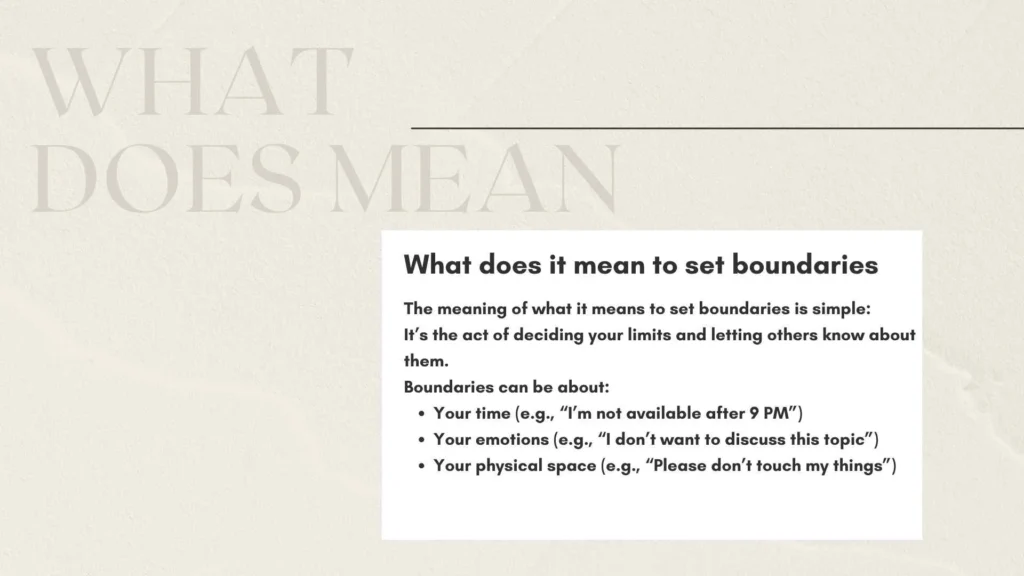
The meaning of what it means to set boundaries is simple:
It’s the act of deciding your limits and letting others know about them.
Boundaries can be about:
- Your time (e.g., “I’m not available after 9 PM”)
- Your emotions (e.g., “I don’t want to discuss this topic”)
- Your physical space (e.g., “Please don’t touch my things”)
It’s not about controlling others—it’s about controlling what you allow.
Full Meaning in Simple Words
In everyday language, setting boundaries means:
- Saying “no” without feeling guilty
- Protecting your mental health
- Not letting others take advantage of your kindness
- Being clear about your needs and limits
Think of boundaries like invisible lines that keep you safe and respected.
What Does It Mean to Set Boundaries in Text?
In texting, the phrase often appears when someone wants to:
- Explain their limits
- Ask for space
- Stop unhealthy behavior
Example meanings in text:
- “I need to set boundaries” → I need space or limits
- “You should set boundaries” → Don’t let people misuse you
What Does It Mean to Set Boundaries on Social Media (TikTok, Instagram, etc.)?
On platforms like TikTok or Instagram, this phrase is often used in:
- Mental health content
- Relationship advice videos
- Self-care discussions
It usually means:
- Don’t tolerate toxic behavior
- Prioritize yourself
- Protect your energy
Platform-Based Examples
WhatsApp Chat Example
A: You never reply on time!
B: I’m setting boundaries. I can’t be online all the time.
Instagram DM Example
Friend: Why didn’t you come to the party?
You: I’m focusing on myself and setting boundaries lately.
TikTok Comment Example
“Setting boundaries is self-love, not selfishness 💯”
Real-Life Meaning and Usage
In real life, setting boundaries shows emotional maturity.
It helps you:
- Avoid burnout
- Build respect in relationships
- Stay mentally healthy
For example:
- Not answering work calls after hours
- Saying no to things you don’t enjoy
- Limiting toxic people in your life
Real-Life Situations Where This Term Is Used
People use this phrase in situations like:
- Workplace: “I won’t work overtime every day.”
- Friendships: “Don’t joke about my personal life.”
- Family: “I need some alone time.”
- Relationships: “I deserve respect and honesty.”
Examples of What Does It Mean to Set Boundaries in Sentences
- I’ve started setting boundaries to protect my mental health.
- She learned to set boundaries after being treated badly.
- Setting boundaries helped him focus on his goals.
- You need to set boundaries if people keep taking advantage of you.
- Healthy relationships require clear boundaries.
Different Contexts of What Does It Mean to Set Boundaries
Casual
Used in everyday talk:
- “I’m setting boundaries with toxic people.”
Academic
Used in psychology or counseling:
- “Boundary-setting is essential for emotional regulation.”
Online/Slang
Used in self-care culture:
- “Protect your energy—set boundaries!”
Origin and History of the Term
The concept of boundaries comes from psychology and therapy.
It became popular through:
- Self-help books
- Therapy discussions
- Mental health awareness movements
In recent years, social media made it a trending topic, especially in Gen Z culture.
Why Do People Use This Word?
People use this phrase because:
- They want to express self-respect
- They are learning emotional awareness
- They want healthier relationships
- They are tired of being taken for granted
Emotional & Psychological Meaning Behind This Word
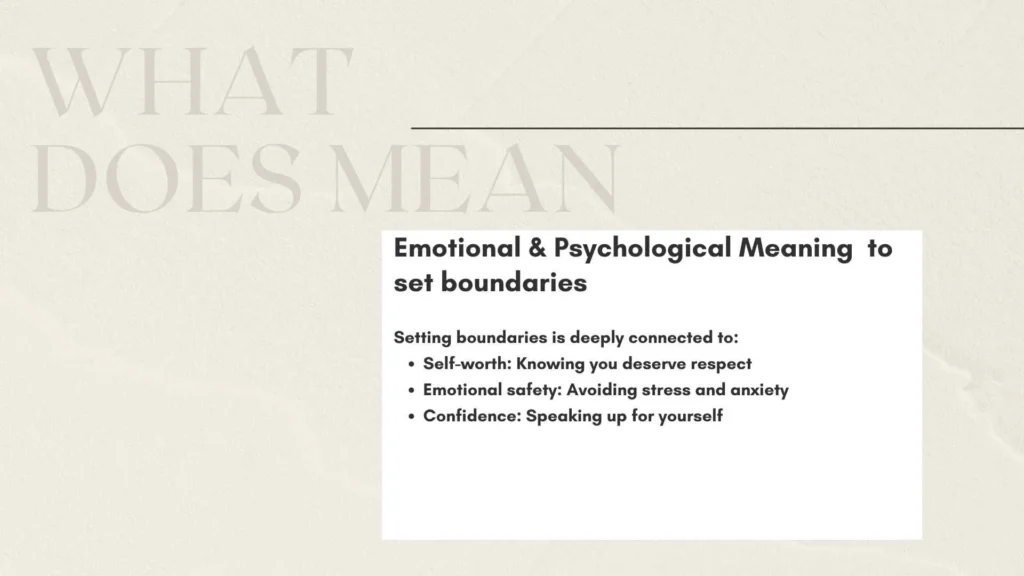
Setting boundaries is deeply connected to:
- Self-worth: Knowing you deserve respect
- Emotional safety: Avoiding stress and anxiety
- Confidence: Speaking up for yourself
Without boundaries, people often feel:
- Drained
- Disrespected
- Overwhelmed
Tone Explanation
- Formal: Used in therapy, counseling, or workplace discussions
- Informal: Common in daily conversations
- Not slang: But widely used online
- Respectful tone: Usually calm and assertive
Is It Rude to Say This Word?
No, it is not rude.
However, tone matters:
- Calm explanation → respectful
- Angry delivery → may sound rude
Is This Word Positive, Negative, or Neutral?
- Mostly positive
- Sometimes seen as strict or negative by others
- Overall, it promotes healthy behavior
When to Use What Does It Mean to Set Boundaries
Use it when:
- You feel uncomfortable
- Someone crosses your limits
- You need space or time
- You want respect
When NOT to Use It
Avoid using it:
- As an excuse to ignore responsibilities
- To control others
- Without clear communication
Situations Where You Should Avoid Using This Word
- When you haven’t explained your feelings properly
- In highly sensitive situations without empathy
- If it may sound dismissive or harsh
Comparison Table
| Term | Meaning | Usage | Key Difference |
| Setting Boundaries | Defining limits | Relationships, self-care | Focus on personal limits |
| Saying No | Refusing something | Daily life | One-time action |
| Self-Care | Taking care of yourself | Health & lifestyle | Broader concept |
| Being Assertive | Expressing needs confidently | Communication | Focus on communication style |
Variations and Related Meanings
- Healthy boundaries – Balanced limits
- Personal boundaries – Individual comfort zones
- Emotional boundaries – Protecting feelings
- Physical boundaries – Personal space
- Time boundaries – Managing availability
- Digital boundaries – Limiting online interaction
- Work boundaries – Separating job and personal life
- Relationship boundaries – Respect in partnerships
How to Respond
Casual Replies
- “That’s good, take care of yourself.”
- “Respect that 💯”
Funny Replies
- “Boundaries unlocked 😄”
- “Finally choosing peace!”
Professional/Mature Replies
- “I understand and respect your boundaries.”
- “Thank you for communicating clearly.”
Cultural Usage
USA / Western Usage
- Strong focus on mental health
- Encouraged in therapy and relationships
- Seen as a sign of confidence
Global / Internet Usage
- Popular in self-care communities
- Sometimes misunderstood as being distant
- Widely used in motivational content
What Does It Mean to Set Boundaries in Text?
In text, it usually means:
- Asking for space
- Stopping unwanted behavior
- Protecting emotional well-being
What Does It Mean to Set Boundaries on TikTok / Instagram?
On social media, it often means:
- Avoiding toxic people
- Choosing peace over drama
- Prioritizing self-growth
Is It Rude to Say This?
No—but delivery matters.
Respectful tone = healthy communication
Aggressive tone = may feel rude
Why Do People Use This Word?
- To protect themselves
- To build better relationships
- To improve mental health
- To feel in control of their life
FAQs
What does it mean to set boundaries in a relationship?
It means clearly telling your partner what is acceptable and what is not.
Is setting boundaries selfish?
No. It is a healthy act of self-respect, not selfishness.
How do I start setting boundaries?
Start by identifying your limits and communicating them calmly.
Why is it hard to set boundaries?
Fear of rejection, guilt, or conflict often makes it difficult.
Can boundaries improve relationships?
Yes. They create respect, trust, and clear expectations.
What happens if you don’t set boundaries?
You may feel stressed, overwhelmed, or taken advantage of.
Are boundaries permanent?
No. They can change as your needs change.
Conclusion
So, what does it mean to set boundaries? It means knowing your limits, respecting yourself, and clearly communicating what you need from others. It’s not about pushing people away—it’s about creating healthier, more respectful connections.
When you set boundaries, you protect your time, energy, and emotions. And in today’s fast-paced world, that’s not just helpful—it’s necessary.

Daniel Carter is a passionate writer and creative storyteller dedicated to exploring the deeper meanings of life, dreams, and human experiences. With a strong interest in symbolism, spirituality, and personal growth, Daniel brings clarity to complex ideas, making them easy to understand for readers from all walks of life.
As a featured author on meaniings.com, Daniel Carter focuses on delivering insightful, well-researched, and engaging content that helps readers uncover hidden meanings behind dreams, emotions, and everyday situations. His writing style combines thoughtful analysis with a relatable voice, making his work both informative and inspiring.
Daniel’s approach is rooted in curiosity and a desire to guide readers toward self-awareness and understanding. He believes that every dream and experience carries a message—one that can lead to personal transformation when interpreted correctly.
Over time, Daniel has built a reputation for creating meaningful content that resonates with a global audience, especially those interested in dream interpretation and spiritual insight.
Books by Daniel Carter:
- The Hidden Language of Dreams
- Signs, Symbols, and Their Meanings
- Unlocking the Power of Your Subconscious Mind